
From the Clinic to the Podium: Microneedling as a Regenerative Tool in Hair Loss
Spencer Hawkins, MD
Board-Certified Dermatologist & Fellowship-Trained Hair Restoration Surgeon
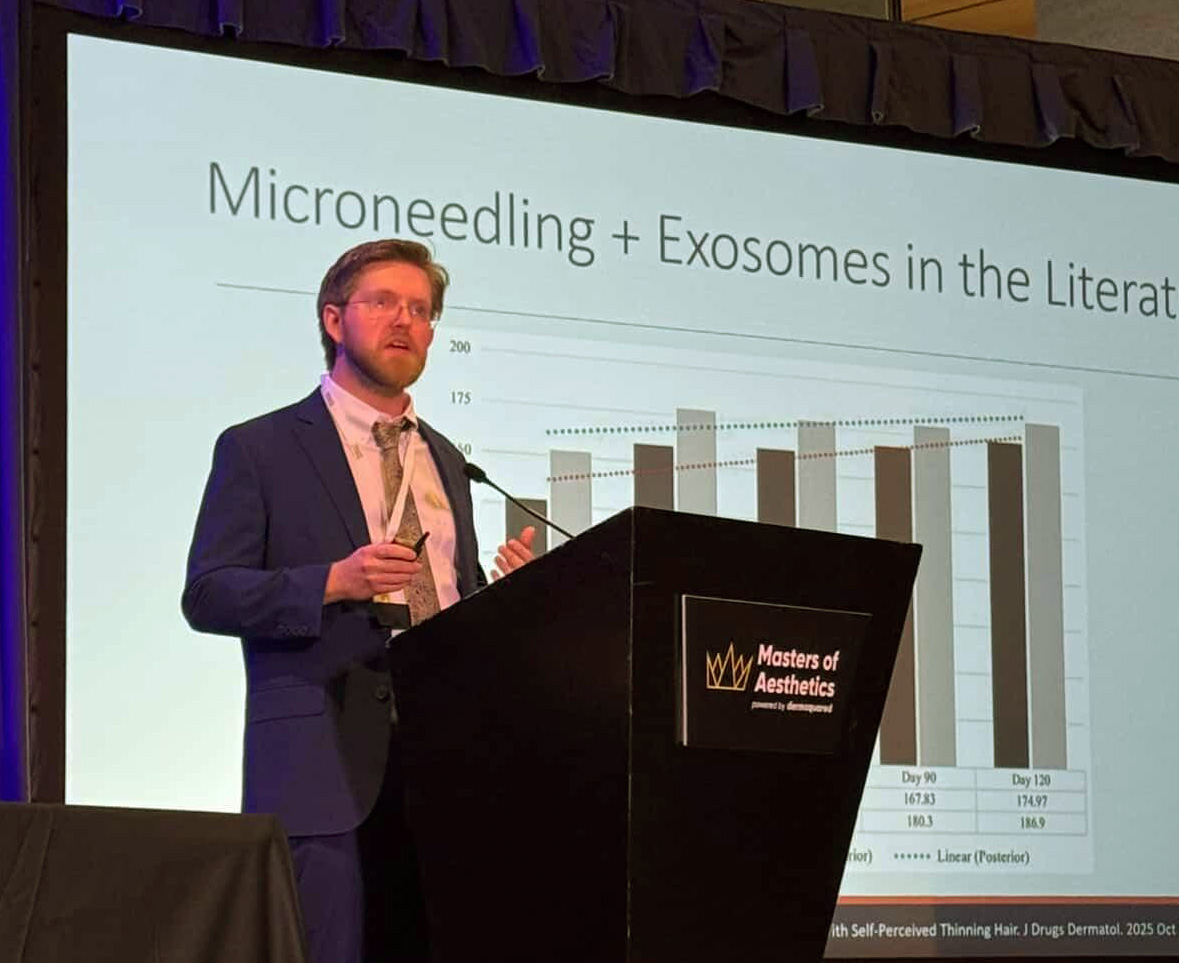
I had the opportunity to present a clinical pearl at Masters of Aesthetics East Coast in Miami—one of the more selective meetings in dermatology and aesthetic medicine. These meetings matter because they’re where physicians share what actually works in real-world practice, not just what looks good in theory.
My presentation focused on a topic that has become increasingly important in my hair restoration practice at Hair Medicine Institute: the role of microneedling as a regenerative platform in difficult-to-treat alopecias.
The Clinical Pearl
In medicine, a clinical pearl is a concise insight that meaningfully changes how you approach patient care. The key message I shared was simple:
Microneedling should not be viewed as a cosmetic add-on—it is a biologically active, regenerative tool that can meaningfully improve outcomes in recalcitrant hair loss.
While microneedling is widely recognized for skin rejuvenation, its application in hair restoration—particularly for inflammatory and scarring alopecias—remains underutilized and often oversimplified.
Where Standard Therapy Falls Short
Many of the patients I discussed during the lecture had already exhausted conventional options: topical agents, oral medications, intralesional injections. Their disease had plateaued. Progress stalled.
Rather than abandoning treatment, we reframed the problem.
The question wasn’t what medication to add, but how to change the scalp environment itself.
Why Microneedling Works
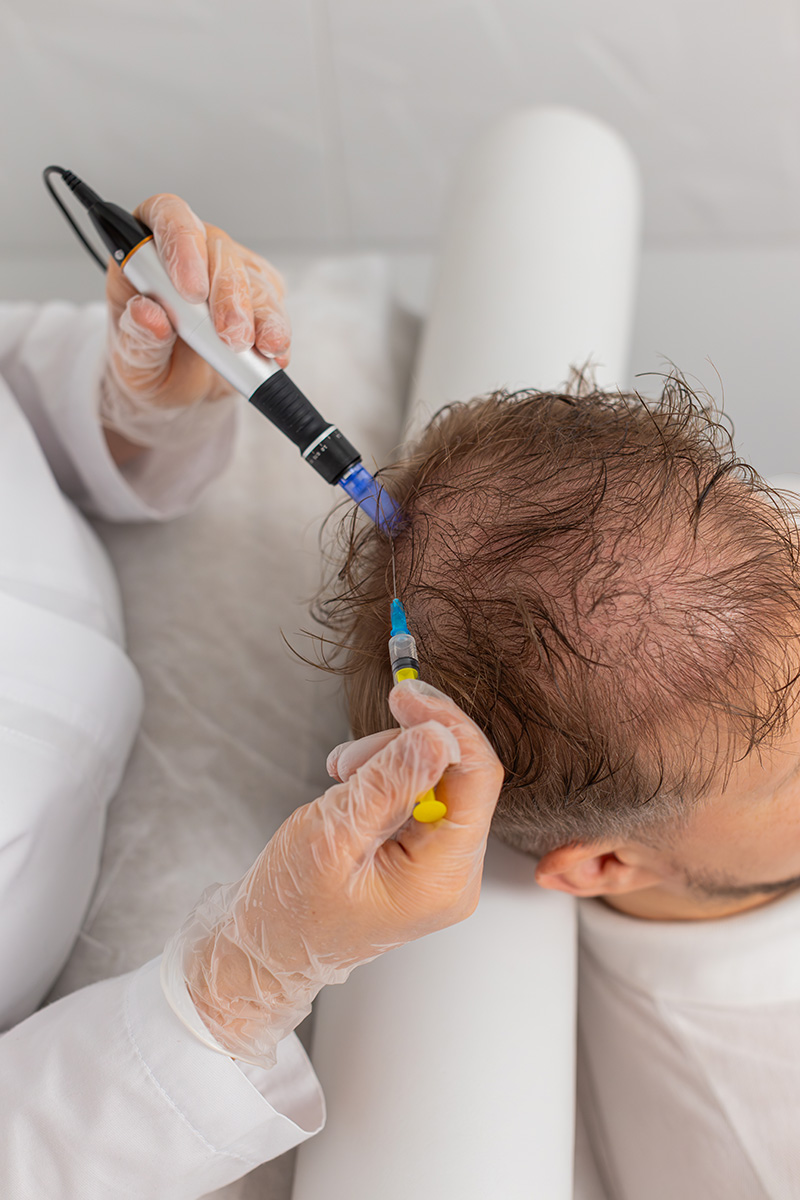
When performed with intention and precision, microneedling does three critical things:
- Induces controlled micro-injury, activating the wound-healing cascade
- Upregulates growth factors such as VEGF and PDGF that support follicular recovery
- Enhances transdermal delivery, allowing agents like corticosteroids or exosomes to reach deeper, more relevant tissue planes
Used this way, microneedling becomes a biologic amplifier, not a standalone treatment.
Clinical Impact in Scarring and Inflammatory Alopecia
I presented cases of patients with conditions such as Central Centrifugal Cicatricial Alopecia (CCCA) and Alopecia Areata who had shown minimal response to standard therapy alone.
By integrating structured microneedling protocols into a broader medical and regenerative strategy, we were able to observe:
- Re-emergence of terminal hairs
- Improved scalp health and reduced inflammation
- Continued progression in patients who had previously plateaued
These are not overnight transformations—but they are meaningful, durable improvements in conditions where expectations are often low.
What This Means for Patients
Speaking at meetings like Masters of Aesthetics isn’t about recognition—it’s about pressure-testing ideas against peers who do this work every day. If a protocol holds up in that environment, it earns a place in clinical practice.
For patients, the takeaway is this:
“Nothing else can be done” is rarely the full story.
With the right combination of medical therapy, regenerative techniques, and careful execution, there are often additional options worth exploring.
If you’re dealing with hair loss that has stalled or failed to respond to standard treatment, a more advanced, regenerative approach may be appropriate.