
Medical therapy and surgical options for fuller facial hair
If you’re trying to grow a fuller beard, it helps to know what’s actually possible—and what’s marketing noise. Beard density is driven by genetics, hormones, follicle “availability,” and time. Some men naturally have high follicle counts in the beard area; others have fewer follicles there, and no supplement or device can create brand-new follicles where none exist.
That said, many patients can improve thickness, coverage, and cosmetic density using medical therapy and/or surgery—especially when expectations are realistic and the plan is consistent.
Note: Hair Medicine Institute does not currently offer beard transplantation. This page is for education, so you can make informed decisions and ask better questions if you pursue treatment elsewhere.
Who is a good candidate for treatment?
Beard growth interventions are most useful when you have at least one of the following:
- Patchiness (especially cheeks and jawline) that hasn’t improved after the early 20s
- Sparse density where hairs exist but are thin/light
- Post-trauma or post-surgical scarring affecting facial hair growth
- Gender-affirming goals (common reasons to explore medical therapy and transplant options)
Medical Therapy for Beard Hair Growth
1) Minoxidil (topical and oral)
Minoxidil is the best-known medication used off-label to improve beard density. It does not “create” new follicles, but it can help miniaturized or dormant follicles produce thicker hairs and may help convert some fine hairs into more visible terminal hairs over time.
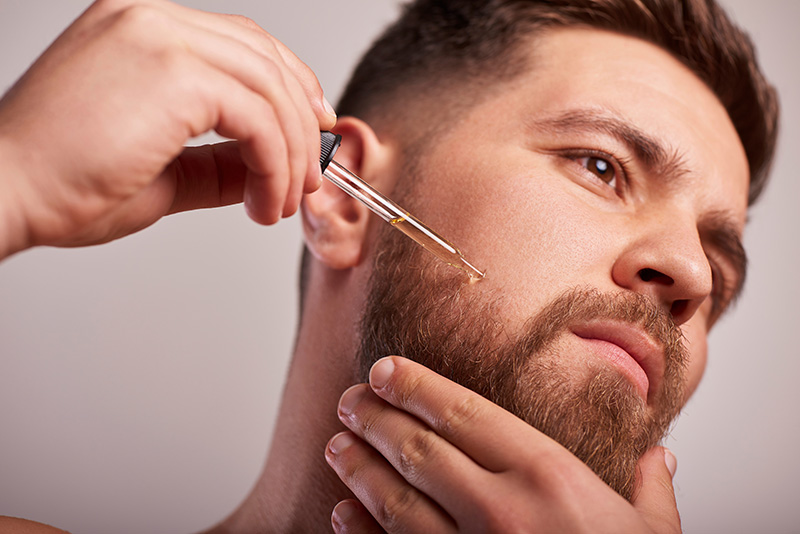
Topical minoxidil (foam or solution)
- Often used once or twice daily to targeted areas (cheeks, jawline, mustache gap, etc.)
- Benefits: localized treatment; avoids systemic exposure for many patients
- Common downsides: irritation, dryness/flaking, contact dermatitis, unwanted hair growth if it spreads to nearby areas
Oral minoxidil (low dose)
- Increasingly used in hair medicine for scalp hair—and sometimes used off-label for beard growth
- Benefits: convenient; avoids many topical irritation issues
- Important considerations: because it’s systemic, it can cause side effects such as swelling, dizziness/lightheadedness, increased heart rate, and increased hair growth elsewhere
Realistic timeline
- Expect a slow ramp: visible changes often take 3–6 months, with fuller results sometimes taking 9–12+ months.
- Consistency matters more than intensity. If you stop, some gains can regress.
Safety note
Minoxidil—especially oral—should be discussed with a physician who can review your history, medications, blood pressure, and any heart rhythm concerns.
2) Prostaglandin analogs: bimatoprost / latanoprost
Bimatoprost and latanoprost are prostaglandin analogs best known from ophthalmology (notably for eyelashes). Some clinicians use them off-label in hair medicine because prostaglandin signaling can influence the hair cycle.
What they may do
- Potentially increase hair caliber, darkness, or apparent density in some users
- Effects can be subtle, variable, and slower than people expect
Important limitations
- Evidence for beard growth is more limited than for eyelashes
- Results are not guaranteed
- Formulation, dose, and application method matter, and “DIY” use can increase irritation or unwanted effects
Potential side effects (especially around the face)
- Skin irritation, redness, or dryness
- Unwanted hair growth in non-target areas if spread occurs
- Pigment changes can occur in some contexts (classically noted around eyes with certain use patterns)
- This is a therapy best approached with physician guidance—not internet protocols.
Beard Hair Transplant
A beard hair transplant typically involves harvesting grafts from the scalp (often the back/sides) and implanting them into the beard region to create coverage in thin areas or to change the beard’s shape.
How it works (high level)
- Donor hair: usually scalp hair
- Method: typically FUE (follicular unit extraction)
- Placement: grafts are inserted at precise angles to match natural beard direction and create a natural “fade” in density
What to know before considering it
- The hair remains scalp hair in character. It can grow longer/faster than native beard hair and may require more trimming/maintenance.
- Design matters as much as graft count. A natural-looking beard is about direction, spacing, and gradual density—not just “more hairs.”
- Healing and timeline: transplanted hairs often shed initially, then regrow over months; final results can take 9–12+ months.
Common reasons patients pursue beard transplant
- Persistent patchiness
- Scar camouflage (injury, acne scarring, surgical scars)
- Creating a defined beard outline or mustache/goatee density
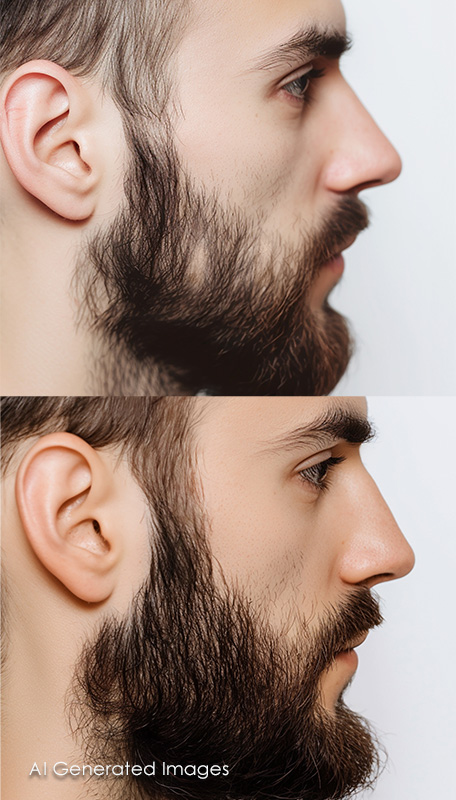
Transplant Beard Hair to the Scalp
Transplant Beard Hair to the Scalp
In select cases, beard hair can be used as a donor source for scalp transplantation—most commonly in advanced scalp hair loss when scalp donor reserves are limited.
Why it’s considered
- Beard hair (especially under the jaw/neck) can provide additional grafts when scalp donor supply is insufficient.
Key tradeoffs
- Texture mismatch: beard hair is often thicker/coarser and can look different on the scalp if placed in the wrong zones.
- Best use cases: it’s often used to add bulk in mid-scalp/crown, not typically the frontal hairline where softness and fine caliber matter most.
- Not every patient is a candidate: donor quality, skin type, and healing tendencies vary.
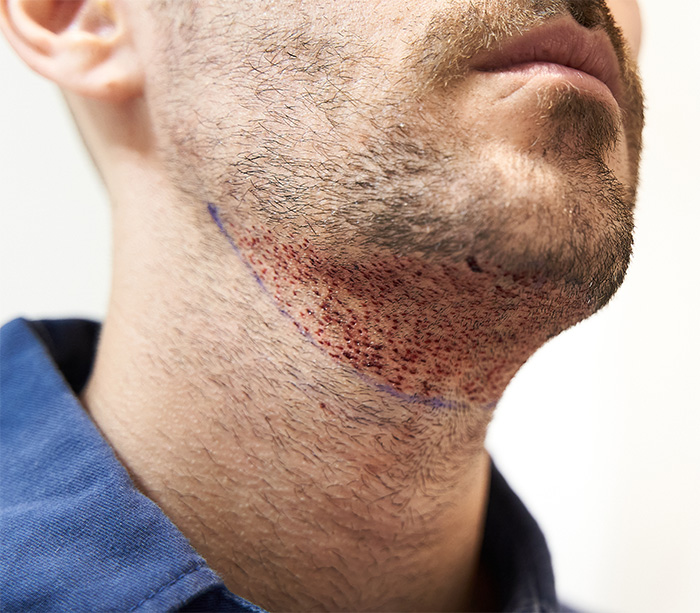
This is an example of beard hair havested via FUE technique for transplantation to the scalp.
Combining medical therapy + surgery
For many patients, the most rational approach is:
- Start with medical therapy (minoxidil ± other physician-guided options) for several months
- Reassess pattern, density, and goals
- Consider surgery only if you still have true “low follicle real estate” in the beard area—or if you want a larger change than medicine can realistically produce
The most important expectation to set
Beard generation is about optimizing what you have and, when appropriate, redistributing hair surgically. It isn’t about flipping a switch or “unlocking” a beard you were genetically never going to have. The best outcomes happen when goals are specific (coverage vs. shape vs. density), the plan is consistent, and the clinician is cautious and detail-oriented.
Want to learn more?
If you’re exploring beard growth treatments, we recommend discussing:
- Your medical history and tolerance for systemic medications
- Your beard “pattern” and whether the issue is miniaturization vs. true absence of follicles
- Whether a transplant would look natural with your hair characteristics and grooming preferences
- Long-term maintenance expectations