
Finasteride Side Effects Anxiety? Here’s the Truth—and Your Options
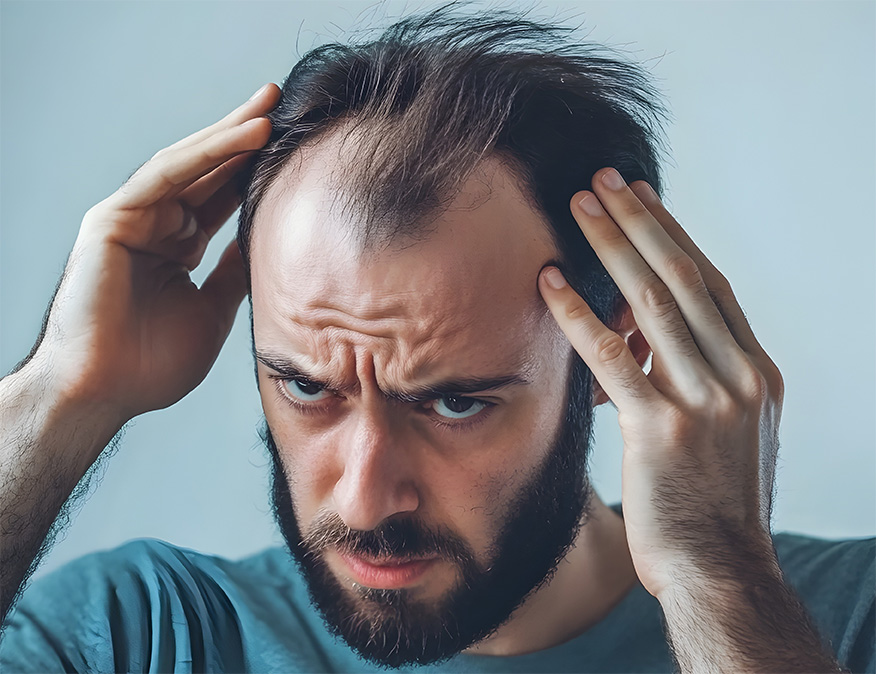
If you’re a man experiencing pattern hair loss, you’ve almost certainly heard about finasteride—and you’ve probably also heard the horror stories.
Loss of libido. Erectile dysfunction. Hormonal disruption.
It’s understandable to be cautious. But avoiding the conversation entirely often leads to a bigger problem: ongoing, irreversible hair loss that could have been prevented or slowed.
Let’s take a step back and talk about what actually causes male pattern hair loss—and how you can treat it intelligently, even if you’re concerned about side effects.
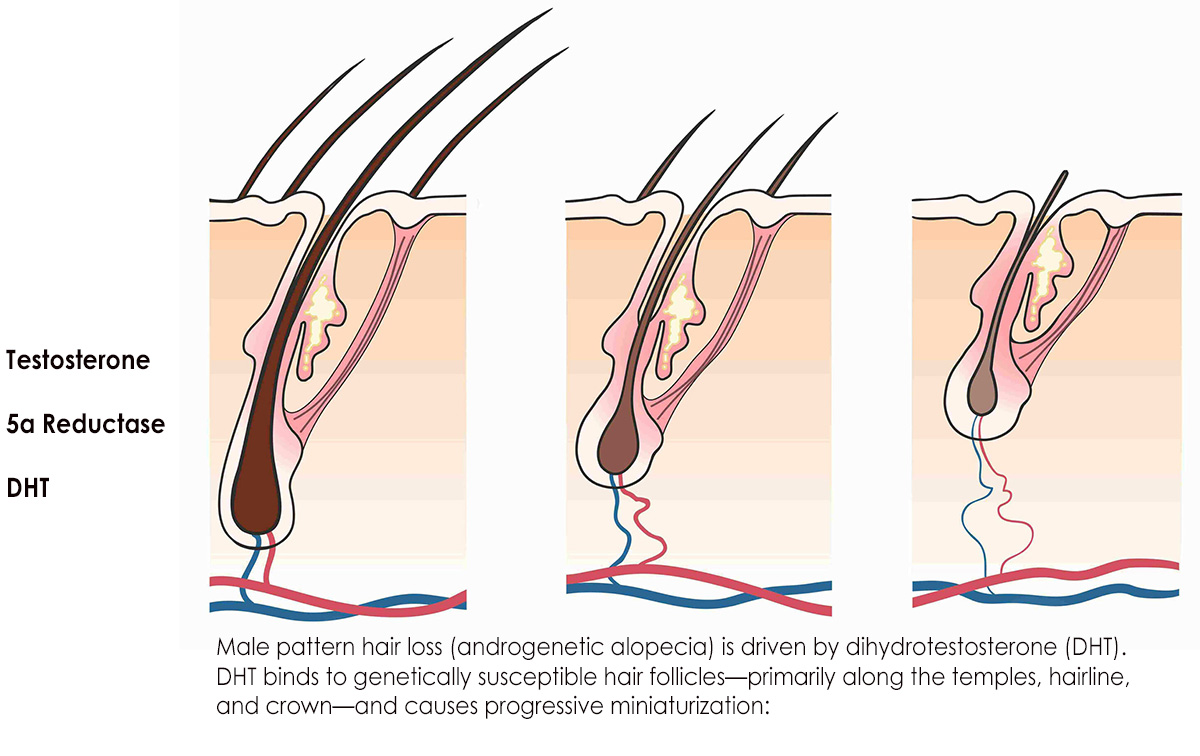
Male pattern hair loss (androgenetic alopecia) is driven by dihydrotestosterone (DHT).
DHT binds to genetically susceptible hair follicles—primarily along the temples, hairline, and crown—and causes progressive miniaturization:
- Thick terminal hairs become thinner
- Growth cycles shorten
- Eventually, follicles stop producing visible hair altogether
This process is slow but relentless.
Why this matters:
- Minoxidil can thicken existing hairs but does not stop DHT
- PRP, exosomes, lasers, supplements do not block DHT
- Hair transplants can replace lost hair, but DHT will continue attacking surrounding native follicles
If DHT is not controlled, hair loss continues.
You cannot outgrow it. You cannot out-PRP it. And you cannot out-transplant it.
Finasteride: The Gold Standard (and Why)
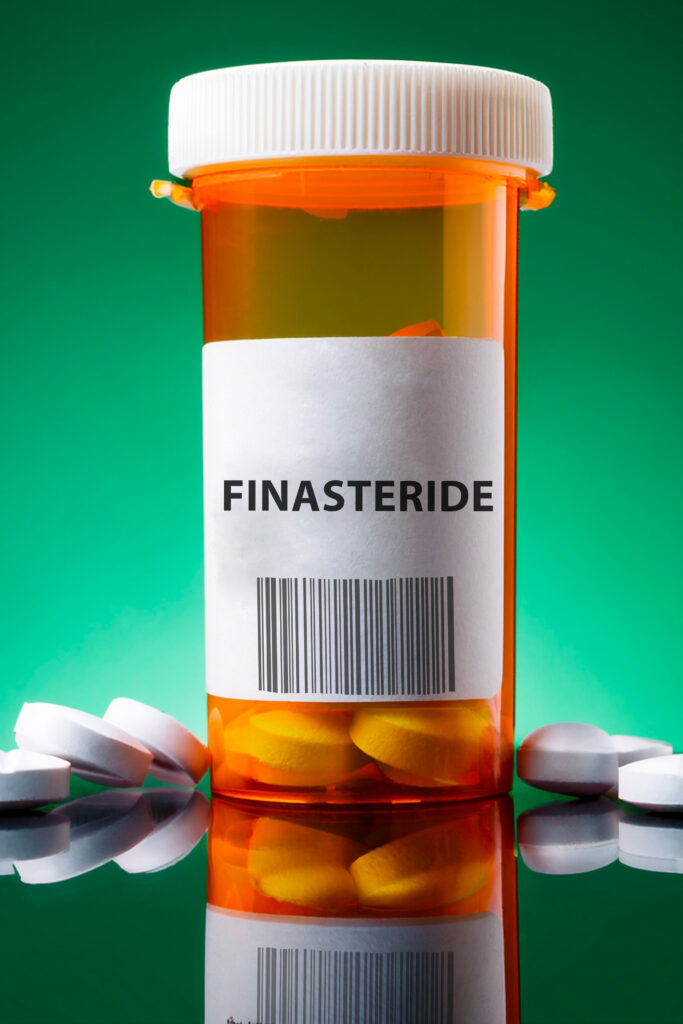
Oral finasteride 1 mg daily has been used for decades and is:
- FDA-approved
- Extensively studied
- Proven to slow or halt hair loss in the majority of men
It works by inhibiting 5-alpha reductase, the enzyme that converts testosterone into DHT, reducing scalp and serum DHT levels by about 70%.
What about side effects?
Large studies show the risk of sexual side effects (libido changes, erectile dysfunction) is approximately 2%.
That means 98% of men do not experience these effects.
Finasteride has one of the clearest risk-benefit profiles in all of dermatology—but concern is still common, and it deserves a thoughtful response.
Dutasteride: Stronger DHT Blockade, Slightly Higher Risk
Dutasteride blocks both type I and type II 5-alpha reductase enzymes and reduces DHT by roughly 90%.
- Often more effective than finasteride
- Especially useful in aggressive or advanced hair loss
The tradeoff:
- Sexual side effects occur in about 4% of men
- Still uncommon—but higher than finasteride
This supports an important principle:
Side effects appear to correlate, at least in part, with how much DHT is blocked.
Which brings us to an important realization…
Hair Loss Treatment Is Not All-or-Nothing
This is not a binary decision between “full dose or nothing.”
If:
- 1 mg finasteride blocks ~70% of DHT
- 5 mg dutasteride blocks ~90%
Then what about:
- Finasteride 1mg every other day?
- Lower oral doses?
- Topical formulations?
Lower or Less Frequent Oral Dosing
Many men maintain meaningful hair stabilization with:
- Finasteride every other day
- Lower daily doses
You may not achieve maximal DHT suppression—but you can still significantly slow hair loss with potentially fewer side effects.
Topical Finasteride: A Powerful Middle Ground
Topical finasteride has emerged as an excellent option for men who want:
- Strong scalp DHT suppression
- Less systemic exposure
Studies show that topical finasteride 0.25% achieves:
- ~90% of the hair benefit of oral finasteride
- With ~50% less systemic absorption
That means:
- Meaningful protection against miniaturization
- Lower circulating drug levels
- A potentially lower risk of systemic side effects
For many men, this is the ideal balance.
A Completely Different Option: Clascoterone
There is now a non–DHT-blocking alternative.
Clascoterone works differently:
- It does not reduce DHT levels
- Instead, it blocks DHT from binding to the hair follicle receptor
In studies:
- No sexual side effects were observed
- Because systemic hormone levels are unaffected
Downsides:
- Requires twice-daily topical application
- Must be compounded until FDA approval in ~2027-28
- Costs approximately $200/month
Still, for men who want to avoid systemic anti-androgens entirely, this is a meaningful option.
The Takeaway: Individualized Androgen Control
The goal is not maximal DHT suppression at all costs.
The goal is to find:
- The highest dose
- In the form you prefer (oral or topical)
- That you can tolerate without meaningful side effects
This may be:
- Lower-dose oral finasteride
- Alternate-day dosing
- Topical finasteride
- Clascoterone
- Or a thoughtful combination
What isn’t optional?
Ignoring androgens altogether.
Because without addressing DHT—or its effect on the follicle—hair loss continues.
Final Thought
Fear around finasteride is common—but paralysis is not your only option.
Modern hair loss treatment is nuanced, flexible, and customizable. There are multiple ways to partially or effectively block androgen effects while respecting your comfort level and risk tolerance.
The best plan is not one driven by fear—but by informed, individualized decision-making.
If you’re concerned, talk to a physician who understands both the science and the spectrum of options.