
What Is Telogen Effluvium?
Telogen effluvium (TE) is the medical term for diffuse hair shedding triggered by a physiologic stress on the body. It is one of the most common types of acute hair loss, and it can be alarming — patients often describe finding clumps of hair in the shower drain, on the pillow, or tangled in a brush. Unlike androgenetic alopecia, where hair slowly miniaturizes over years, telogen effluvium involves a sudden, dramatic increase in the number of hairs that fall out.
The good news: telogen effluvium is not a scarring condition. The follicles are not permanently damaged. In the vast majority of cases, the hair grows back once the trigger is identified and resolved.

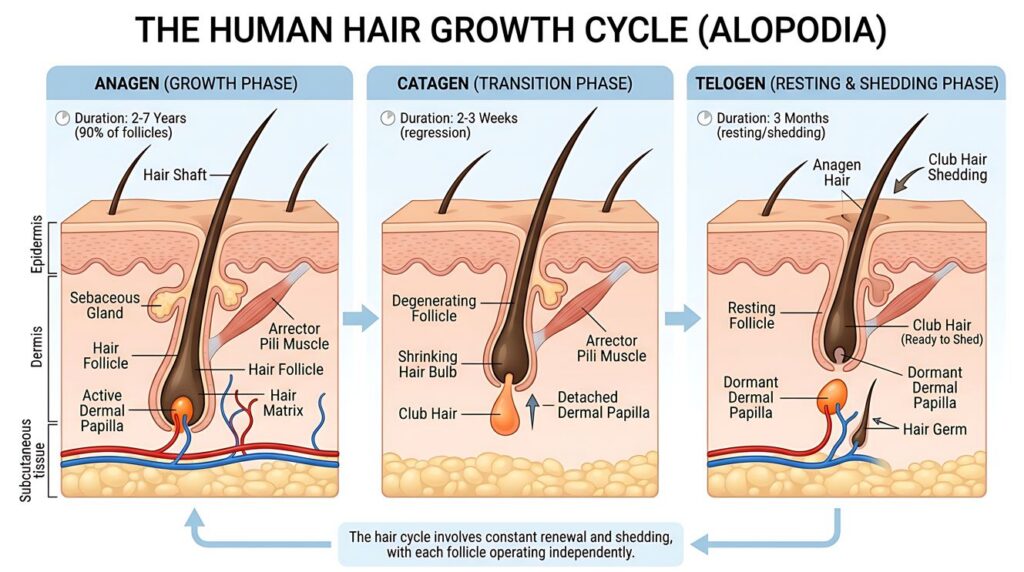
Understanding the Mechanism
To understand telogen effluvium, you need to understand the hair cycle. At any given time, roughly 85–90% of your scalp hairs are in the anagen (growth) phase, which lasts 3–7 years. A small percentage are in catagen (a brief transition phase lasting days), and about 10–15% are in the telogen (resting/shedding) phase, which lasts 2–3 months before the hair falls out and a new one begins growing in its place.
In telogen effluvium, a physiologic shock causes a large proportion of hairs to prematurely exit the growth phase and enter the resting phase simultaneously. Two to three months later — the time it takes for a telogen hair to detach — all of those hairs shed at once. This is why patients typically notice the shedding months after the triggering event, not during it.
Common Triggers
The list of potential triggers is broad, but the most frequently encountered include severe emotional or physical stress (grief, anxiety, a major life event), major illness or surgery, high fever or infections (COVID-19 was a prolific trigger during the pandemic), childbirth and the postpartum hormonal shift, crash dieting or rapid weight loss (including GLP-1 agonists like semaglutide), nutritional deficiencies in iron, vitamin D, or protein, thyroid dysfunction, and medication changes including beta-blockers, anticonvulsants, retinoids, and even starting or stopping birth control pills.
Identifying the trigger is an essential first step, because in many cases, removing or treating the underlying cause is the most effective intervention.
The TE-AGA Overlap
Here is a clinical pearl that most patients do not hear elsewhere: many women who present with what appears to be telogen effluvium also have underlying androgenetic alopecia (AGA) that was previously subclinical. The stress event unmasks the AGA by pushing weakened, miniaturizing hairs into shedding. The telogen effluvium resolves, but the hair does not return to its previous density because the AGA-affected hairs were already compromised.
This is one of the most important reasons to see a dermatologist rather than simply waiting it out. A comprehensive evaluation with dermoscopy can distinguish pure TE from TE superimposed on AGA — and the treatment approach is different for each.
Diagnosis
Telogen effluvium is diagnosed based on clinical history and physical examination. A positive hair pull test — where gentle traction on a lock of hair yields three or more hairs consistently — is suggestive. Dermoscopy can help rule out other conditions, particularly alopecia areata, which can also cause sudden shedding but tends to produce distinct findings like exclamation point hairs and yellow globules.
A laboratory workup is often performed to screen for contributing factors. This typically includes a complete blood count, a comprehensive metabolic panel, thyroid function tests (TSH and free T4), an iron panel with ferritin, and a vitamin D level. These tests help identify treatable deficiencies or medical conditions that may be perpetuating the shedding.

Treatment and Timeline
Telogen effluvium is self-limiting in most cases — once the trigger is removed, the shedding stops within a few months. However, because hair grows at roughly half an inch per month, it can take 6–12 months for the new growth to reach a cosmetically noticeable length. Patience is important, but so is proactive management.
Addressing the root cause is step one: correcting nutritional deficiencies, managing thyroid dysfunction, adjusting medications, or treating chronic stress. For patients whose shedding is severe or persists beyond 6–9 months, minoxidil — either topical 5% or low-dose oral (1.25 mg) — can help accelerate regrowth by pushing follicles back into the anagen growth phase more quickly.
Supportive measures include ensuring adequate dietary protein, managing stress through evidence-based strategies, and avoiding harsh styling during the recovery period. Hair-focused nutritional supplements can complement a balanced diet but are not a substitute for addressing the underlying trigger.
When to Seek Evaluation
While some shedding is normal — we all lose 50–100 hairs per day — certain patterns should prompt evaluation: shedding that fills the drain or leaves visible clumps, thinning that makes the part look wider, shedding that persists beyond 6 months, or shedding accompanied by a widening part or visible scalp. These may indicate that telogen effluvium is not the only process at work.
Next Steps
If you are experiencing significant shedding — particularly if it has been ongoing for more than a few months — a thorough evaluation can help identify the trigger, rule out overlapping conditions such as androgenetic alopecia, and develop a targeted plan to support recovery. Hair loss from telogen effluvium is not permanent, but getting the right diagnosis early ensures you are on the fastest path to regrowth.